How Conference Marketing Photography Boosts Pre- and Post-Event Promotion

Updated: Oct 28
A conference photograph can document what happened and still be awkward for the team trying to publish it. A tight speaker portrait may work for a quote but leave no room for a website headline. A beautiful room image may say nothing about a sponsor’s involvement. I start by asking where the pictures will appear, who they need to reach and what they need to communicate.
Give each requested image a clear job
For a press announcement, prioritise recognisable people and a clear moment. For a website banner, think about the space needed for the layout. For a sponsor report, ask for interaction and context as well as a readable logo.
These are different needs, not a reason to request a separate photograph for every possible platform. Tell me the main uses and any actual artwork requirements so I can plan a useful mix of wider and closer compositions.

Prepare the images needed before the next event
If you are promoting the next edition, review the previous event’s collection first. Does it show the room, audience, speakers, networking and identity of the event? Identify the missing categories before sending a new brief.
Use photographs of the actual event wherever appropriate. Do not attach an unrelated crowd image to a claim about who attended or how many tickets were sold. The picture and the accompanying statement should tell the same story.

Plan a small same-day selection for live communication
I can edit 15–20 same-day highlights on site during a break or dinner when arranged in advance. Agree which moments your team needs first and who receives the selection.
That gives you material while the event is still current, without confusing the highlights with the full edited gallery. My standard full-gallery delivery is five to seven working days; urgent delivery can be discussed in advance.
Make space for branding without losing the people
A room-wide frame establishes the scale and setting; a closer image can show a conversation or reaction. A sponsor image becomes more informative when it shows what people are doing with the stand or activity.
Ask for the people and moments you need, and share any essential branding requirements. Avoid turning every conversation into a request to face the same backdrop. The event should still be enjoyable for the people attending it.

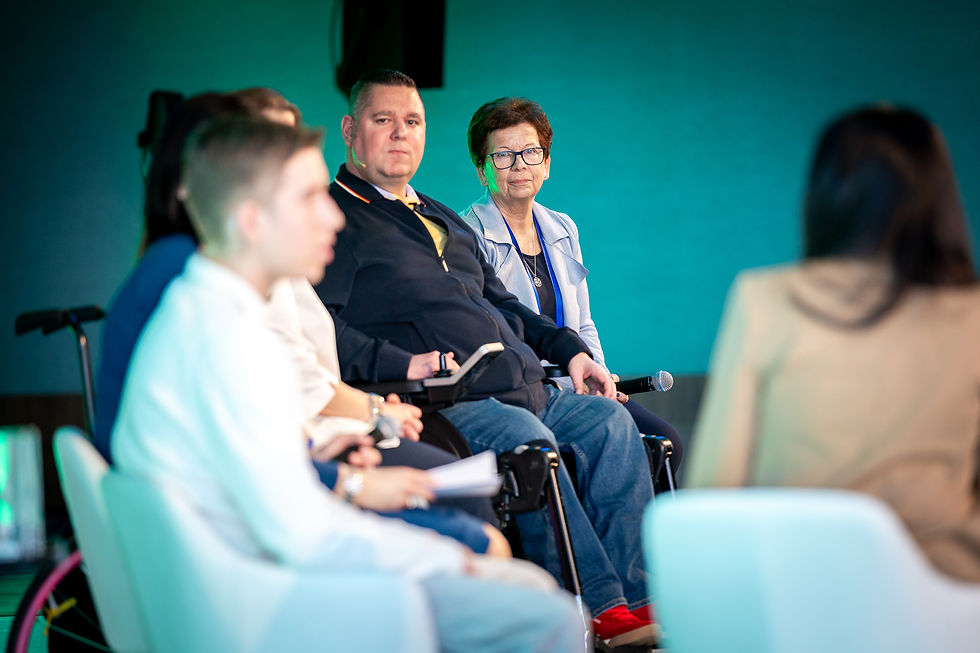
A wider photograph can show event scale and stage identity in a way a tight portrait cannot.
Build a library your team can navigate
When the gallery arrives, select images by purpose: press, speakers, networking, sponsors, venue and details. Confirm any publication restrictions and captions before distributing pictures externally.
The example photographs below show different communication formats, including images printed during an event. They illustrate potential uses; they are not evidence of a particular marketing result. For a practical capture plan, use the conference shot list.

Printed photographs are a different use from a website banner or a press image; tell the photographer about the intended output.